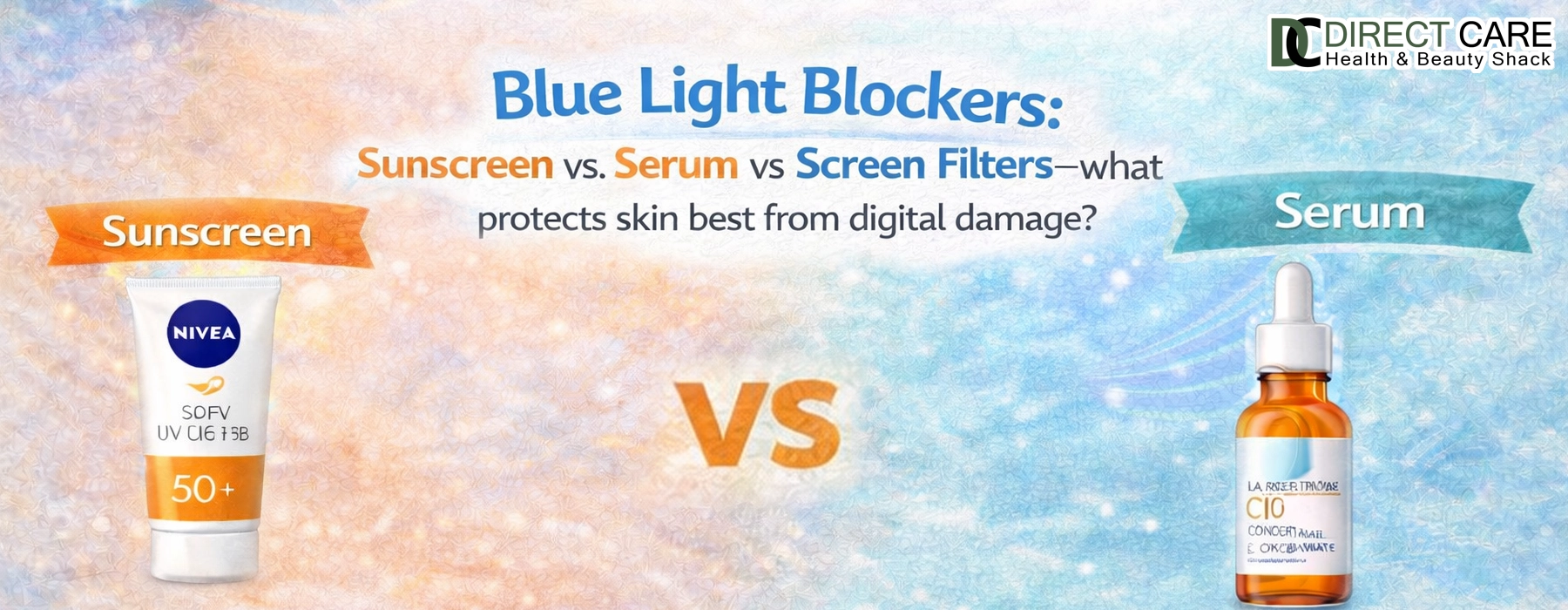
You check your screen time and realise the hours add up. Work, social scrolling, messaging, and evening downtime all happen in front of a device. Skin starts to look dull or uneven, and ‘blue light protection’ appears as the solution. But the options—sunscreen, serum, screen filters—create confusion. You need to know what works, what fits your routine, and where marketing overpromises. This guide breaks down the science of digital damage and helps you build a skincare routine that protects your skin without adding unnecessary steps.
What ‘digital damage’ means and how it affects skin
-
Blue light exposure exists beyond screens
Blue light (high-energy visible light) comes from the sun and digital devices. While sunlight delivers the strongest dose, long hours in front of screens contribute to cumulative exposure.
-
Skin signs link to screen time
People report dullness, uneven tone, and inflammation after extended screen use. Research suggests blue light generates free radicals that stress the skin barrier and accelerate pigment changes.
-
Protection requires a multi-layered approach
No single product blocks 100% of blue light. Effective protection combines topical antioxidants, physical barriers, and habits that reduce direct exposure.
-
The goal remains consistent protection
You protect skin best when you limit unnecessary exposure and support the skin’s natural repair process. A routine that focuses on barrier health and daily defence works better than sporadic use of ‘blue light’ products.
Sunscreen: the primary defence against light and UV
-
Sunscreen covers the broadest spectrum
Sunscreen protects against UV rays, which cause the most significant damage. Many formulas also contain ingredients that help scatter or absorb visible light, offering a baseline of blue light defence.
-
Mineral filters offer physical blocking
Zinc oxide and titanium dioxide sit on the skin surface and reflect light. These mineral filters provide a physical shield that helps block blue light better than some chemical-only formulas.
-
Iron oxides enhance visible light protection
Tinted sunscreens often contain iron oxides, which research shows block visible light effectively. This ingredient adds a layer of defence specifically against the blue light spectrum.
-
Daily application matters more than label claims
You get the best protection when you apply sunscreen every morning as the final step in your skincare routine. Consistency ensures you have a shield in place before you open your laptop or check your phone.
-
Reapplication maintains the barrier
Sunscreen breaks down over time. Reapplying during the day, especially before long outdoor breaks or sitting near a window, keeps the protection active.
Serum: antioxidant support to neutralise free radicals
-
Serums target oxidative stress
Blue light generates free radicals that damage skin cells. Antioxidant serums (like vitamin C, niacinamide, or ferulic acid) neutralise these unstable molecules and reduce oxidative stress.
-
Serum sits under sunscreen for deep defence
You apply serum before sunscreen. This layering ensures that any light penetrating the sunscreen barrier meets a second line of defence in the skin.
-
Ingredients focus on repair and brightness
Serums often contain actives that address dullness and pigmentation. These ingredients help repair visible signs of digital damage while protecting against future stress.
-
Hydration strengthens the skin barrier
Screens and indoor air often dry out the skin. A hydrating serum supports the moisture barrier, making skin more resilient against external aggressors.
-
Serum complements, but does not replace, sunscreen
A serum provides biological support but lacks the physical blocking power of sunscreen. You use serum to boost defence, not as a standalone shield.
Screen filters: reducing exposure at the source
-
Filters lower blue light emission
Physical screen filters and software settings (like “night mode”) reduce the amount of blue light a device emits. This cuts the total load reaching your face and eyes.
-
Glare reduction benefits eye strain
Filters often come with anti-glare coatings. While primarily for eye comfort, reducing the intensity of light directed at the face helps lower overall exposure.
-
Screen filters work as a preventive step
You use filters to stop blue light before it reaches you. This passive protection works constantly whenever the device is in use, requiring no daily application.
-
Settings adjust colour temperature
Software adjustments shift screen colours to warmer tones. This reduces the blue light peak without requiring a physical accessory, though it changes the visual experience.
-
Filters do not protect against sunlight
Screen filters only address device light. They offer no protection against blue light from the sun or ambient lighting, so they cannot replace topical skincare.
Decision guide: choosing the right protection for your routine
-
Prioritise sunscreen for all-day defence
If you want one product, choose a broad-spectrum sunscreen. It protects against the strongest source of blue light (the sun) and offers baseline defence against screens.
-
Add serum for targeted correction
If you notice dullness or pigmentation, add an antioxidant serum. It works below the surface to repair damage and boost the effectiveness of your sunscreen.
-
Use screen filters to cut chronic exposure
If you spend 8+ hours a day on screens, install a physical filter or use software settings. This reduces the cumulative load without changing your skincare routine.
-
Combine methods for maximum protection
The most effective strategy uses all three: reduce source emission with filters, neutralise free radicals with serum, and block light with sunscreen.
-
Listen to your skin’s needs
Monitor your skin for changes. If dryness persists, focus on hydration. If pigmentation increases, prioritise tinted sunscreen and antioxidants.
Routine templates to protect skin from digital damage
-
Minimalist AM routine
Cleanse → Tinted Sunscreen (blocks UV and visible light).
-
Antioxidant-focused AM routine
Cleanse → vitamin C Serum (neutralises free radicals) → Sunscreen.
-
Screen-heavy day routine
Cleanse → Antioxidant Serum → Moisturiser → Sunscreen; plus enable device “night mode” or blue light filter.
-
Repair-focused PM routine
Double Cleanse (removes sunscreen/pollution) → Niacinamide Serum (barrier support) → Moisturiser.
-
Mid-day refresh
Mist/Hydrate → Reapply Sunscreen (especially if sitting near a window).
Common mistakes that reduce protection
-
Skipping sunscreen indoors
UV rays penetrate windows, and blue light comes from indoor sources. Skipping sunscreen leaves skin vulnerable to both.
-
Relying solely on ‘blue light’ marketing
Products labelled “blue light defence” sometimes lack broad-spectrum protection. Check ingredient lists for antioxidants and physical blockers.
-
Applying too little product
Sunscreen and serums require proper dosage to work. A thin layer of sunscreen offers significantly less protection than the recommended amount.
-
Ignoring eye protection
The skin around the eyes is thin and susceptible to damage. Sunglasses outdoors and screen filters indoors help protect this delicate area.
-
Neglecting the neck and hands
We hold phones at chest level. The neck and hands receive significant screen exposure and require the same protection as the face.
Shop sun care products
Start your routine with the basics. A reliable sunscreen forms the foundation of your defence, while a targeted serum addresses specific concerns like dullness or dehydration. Browse through our collection of sun care products from top brands to find sunscreens, serums, and protective products that fit your skin type and daily habits. Choose formulas you enjoy using to ensure consistency, and combine them with smart screen habits for a complete approach to digital wellness.