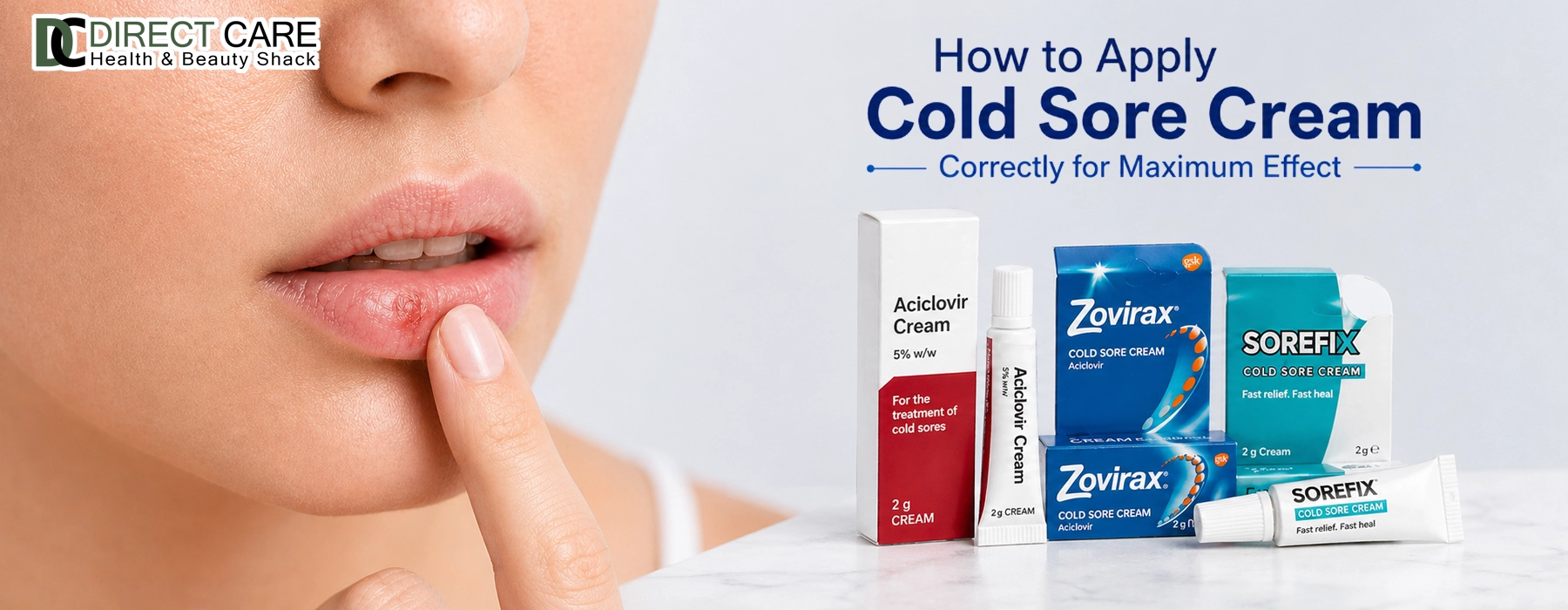
That familiar, dreaded tingle on your lip ruins your week before a blister even appears. You rush to buy a treatment, but simply owning a tube of antiviral medicine does not stop the outbreak. Knowing exactly how to apply cold sore cream correctly for maximum effect determines whether you face a minor bump or a painful, highly visible blister. Some people suffer through prolonged outbreaks simply due to poor application habits. Rubbing the medicine, missing the crucial early window, or using bare fingers wastes the active ingredients. This guide reveals the exact steps you need to halt the virus today.
Spotting the First Tingle to Stop Viral Replication
Timing dictates the entire success of your treatment. Antiviral creams target the virus specifically during its active replication phase.
- Catch the virus in the prodromal phase—the six to twenty-four hour window before the skin turns red or raises.
- Act on physical sensations like itching, burning, or throbbing rather than waiting for visual signs.
- Keep your treatment in your everyday bag so you never miss this early timeframe while commuting or working.
- Identify your specific trigger locations, as the virus typically targets the same spot on your lip during every outbreak.
- Apply the cream immediately at the first invisible stage to stop the virus from forming a blister entirely.
Creating a Sterile Environment Before Application
Cold sores spread aggressively. You need to treat the application process like a small clinical procedure to prevent cross-contamination.
- Wash your hands thoroughly with warm water and soap for twenty seconds before handling the medicine tube.
- Dry your hands with a fresh paper towel instead of a shared bathroom hand towel to avoid transferring bacteria.
- Use a disposable cotton bud as your primary applicator to provide a completely sterile surface that you discard immediately.
- Clean the surrounding lip area gently with plain water to remove food debris and natural oils.
- Never touch the medicine nozzle directly to your lip or bare finger, as this reinflects the tube for future applications.
The Exact Dabbing Technique for Skin Absorption
The physical motion you use to apply the medicine determines how well it works. Physical friction damages sensitive lip tissue and triggers the blister to grow.
- Dispense a tiny amount of cream onto your sterile cotton bud to form a translucent layer over the affected area.
- Dab the cream directly onto the tingling zone using a light, gentle tapping motion.
- Avoid rubbing or massaging the medicine into the lip tissue, as friction forces the active virus deeper.
- Apply the cream one centimetre past the immediate edge of the sore to contain the outward spread of the virus.
- Leave the area uncovered to let the active ingredients penetrate the epidermis without interference.
Scheduling Your Doses to Suppress the Virus
Antiviral medications have a short active lifespan once applied to the surface of the skin. You need to maintain a constant supply of the active ingredient to keep the virus suppressed.
- Apply the cold sore cream five times a day, roughly every four hours during your active waking hours.
- Set an alarm on your mobile device to track the doses and prevent the virus from reappearing between treatments.
- Skip the middle-of-the-night application to allow your body to rest undisturbed.
- Continue the strict schedule for a minimum of four days, even if the tingling completely stops on day two.
- Maintain consistent levels of the medicine in the skin to prevent the virus from replicating and finishing its life cycle.
Preserving the Medicine Layer After Application
Your actions immediately following the application affect the overall absorption rate. Your daily habits either protect this medicine layer or wipe it away prematurely.
- Wait at least thirty minutes before you eat or drink anything to prevent swallowing the active ingredients.
- Use a straw to consume liquids during the absorption window to keep moisture away from the treated area.
- Avoid licking your lips during the entire treatment cycle, as saliva breaks down the antiviral compounds.
- Stay out of direct sunlight immediately after applying the protective cream, as ultraviolet rays trigger virus replication.
- Avoid applying cosmetics, foundations, or standard lip balms over the top of the antiviral cream.
Transitioning Care When a Blister Forms
Sometimes an outbreak moves too fast, or you miss the early tingling window. You need to adjust your application technique to manage an open wound safely.
- Use extreme caution when dabbing cream onto a raised fluid sac to avoid bursting it and spreading contagious liquid.
- Switch to invisible healing patches if the blister opens to seal the fluid inside and provide a sterile healing environment.
- Leave the resulting scab completely alone to prevent delaying the natural healing process.
- Dab the cream very gently over the dry crust to keep the scab soft and prevent painful cracks.
- Wash your hands immediately after treating a blister, as the fluid contains millions of active viral particles.
Shop Our Fast-Acting Treatments
Do not let a cold sore dictate your confidence or ruin your week. The secret to stopping an outbreak is having the right treatment in your hand, the exact moment that first tingle strikes. At Direct Care, we stock the most trusted, fast-acting solutions to help you take back control. From clinical-strength antiviral creams to ultra-discreet healing patches, our complete range provides everything you need for a rapid recovery. Stop waiting for the blister to appear. Browse our premium lip care collection and buy your cold sore treatments now to secure fast, reliable UK delivery directly to your door.