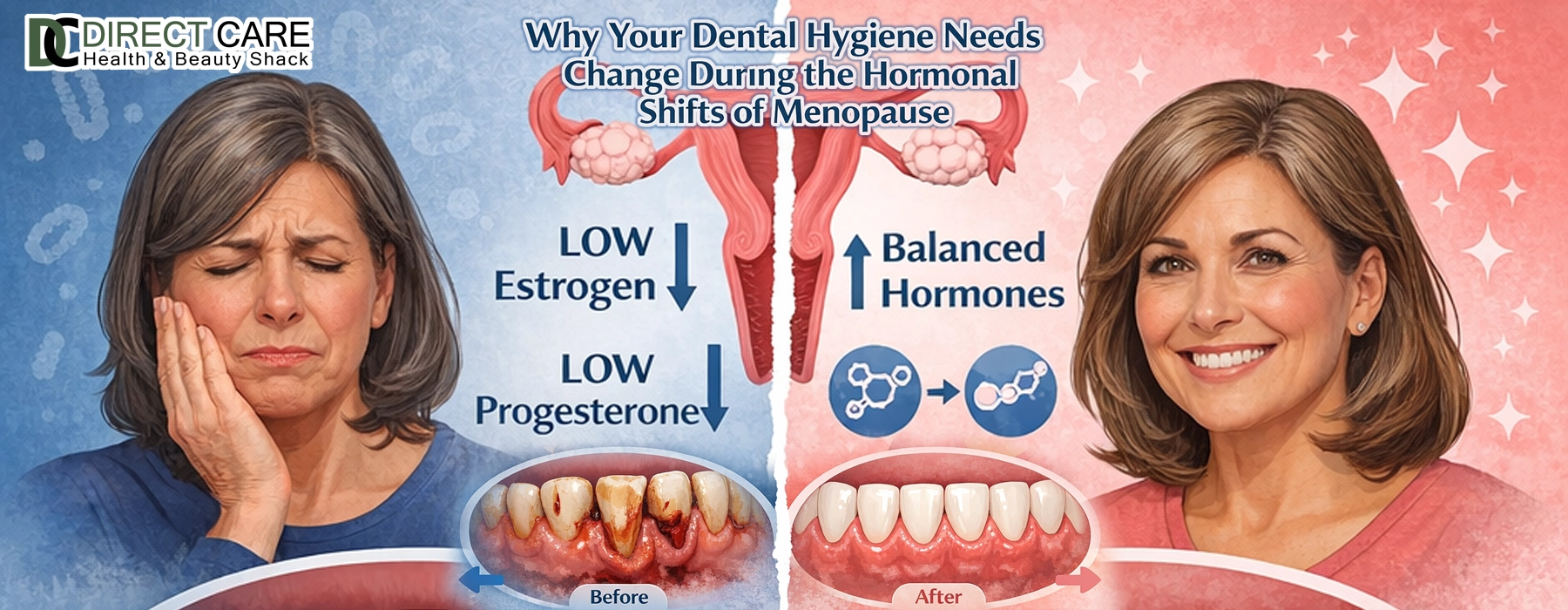
Menopause and oral health are things that people do not often talk about when they discuss issues, but the big drop in oestrogen and progesterone levels during menopause causes a lot of changes in the mouth. These changes in hormones affect the density of the jawbone, the strength of the gums, and how much saliva you make. We know that getting through menopause requires an approach to caring for your teeth and gums beyond the usual hygiene routine. Understanding what your teeth and gums need at this stage of your life can help prevent long-term problems and keep your smile comfortable and healthy. This guide will explain why you need to change how you take care of your mouth during menopause and how to make those changes.
Does menopause affect your teeth and gums?
The decrease in hormones during menopause directly affects the health of your mouth. There are oestrogen receptors in your gums and salivary glands. Knowing about this connection is important for anyone who wants to keep their teeth healthy as they get older.
- Oestrogen and bone density: Oestrogen helps keep the bone that holds your teeth in place. When oestrogen levels drop, this bone can get weaker, which can cause your teeth to become loose or even fall out, even if you do not have any cavities.
- Thinning of the mucosa: The changes in hormones during menopause can make the skin inside your mouth thinner. This makes it more sensitive to things like plaque or brushing your teeth.
- Salivary flow reduction: Your salivary glands do not make much saliva when oestrogen levels are low. This is a problem because saliva helps protect your teeth from acid and washes away food particles.
- Increased gum sensitivity: The blood flow to your gums changes when your hormones are out of balance. This can cause your gums to swell, hurt or bleed when you clean your teeth.
- Impaired tissue repair: When your hormone levels are low, your mouth has a time healing small cuts or ulcers on the soft tissues. This makes it more likely that you will get infections.
- Progesterone and inflammation: Progesterone affects how your body responds to the things in plaque. When progesterone levels are low, you may get severe gum disease, which can make it harder to control plaque.
- Ligament weakening: The ligaments that hold your teeth in place can get weaker when your hormone levels drop. This affects how stable your teeth are.
- Microbiome shifts: The balance of bacteria in your mouth changes when your hormone levels are out of balance. This can cause bad bacteria to grow, which can change the balance of your mouth.
- Jawbone recession: Menopause can cause your jawbone to get weaker, which can lead to problems like osteoporosis.
- Moisture retention failure: When oestrogen levels are low, your gums do not hold moisture well. This can cause your mouth to feel dry and uncomfortable.
- Nutritional absorption changes: The changes in your mouth during menopause can also affect how your body absorbs minerals. You need to pay attention to your dental health to make up for these changes.
Identifying menopause dental symptoms and warning signs
Knowing the signs of menopause-related dental problems can help you get help sooner. We will talk about the symptoms of menopause-related dental problems so you can tell the difference between normal dental issues and those caused by hormonal changes.
- Chronic dry mouth: This is the common symptom. It increases the risk of cavities and enamel erosion because your mouth does not have enough saliva to clean itself.
- Menopausal gingivostomatitis: This condition causes your gums to look pale, shiny or red. They may bleed easily when you clean your teeth, which means the mucosa is not healthy.
- Burning mouth syndrome: This condition causes a burning or tingling sensation in your mouth. It can get worse throughout the day. Make it hard to eat or talk.
- Altered taste perception: This condition affects how you taste things. It can leave a taste in your mouth and make you not want to eat.
- Nerve sensitivity: Your teeth may become more sensitive as your gums recede. The nerves in your teeth can be exposed to temperature changes, which can be painful.
- Persistent bad breath: When you do not have saliva, bacteria can grow in your mouth and cause bad breath.
- Oral ulcers: You may get more mouth sores when your mouth is drier and more sensitive.
- Gum architecture shifts: If your gum line is changing, it can mean that your teeth are not supported properly. You need to see a dentist to prevent damage.
- Tooth mobility: If your teeth feel loose, it can be because the bone that holds them in place is getting weaker. This can happen even if you do not have any cavities or gum disease.
- Plaque accumulation: Plaque can build up faster in a dry mouth. You need to clean your teeth often to prevent this.
- Appliance discomfort: If your dental appliances, like bridges or dentures, are uncomfortable, it can be because your gums are changing.
How to treat the mouth in menopause and protect your enamel
Taking care of dry mouth is important to prevent cavities during menopause. Learning how to treat your mouth involves using special products and changing your daily habits.
- Drinking water: Drinking water throughout the day can help wash food particles and make up for low saliva flow.
- Using alcohol- mouthwash: You should use mouthwash that does not have alcohol to prevent your mouth from getting drier.
- Chewing sugar-free gum: Chewing gum with xylitol can stimulate your glands and help remineralise your teeth.
- Avoiding desiccants: You should avoid things like caffeine and tobacco that can dry out your mouth.
- Using saliva substitutes: You can use products that mimic the properties of saliva to protect your mouth.
- Limiting intake: You should not drink too many acidic beverages, like soda or juice, because they can erode your enamel when your mouth is dry.
- Using a humidifier: You can use a humidifier in your bedroom to keep your mouth moist while you sleep.
- Stabilisation: You should talk to your doctor about hormone replacement therapy and how it can affect your dental health.
- Using toothpaste: You should use toothpaste that is made for dry mouth and does not have ingredients that can irritate your mouth.
- Protecting your gums: You can apply a barrier to your gums before you go to sleep to prevent them from getting dry.
- Management: You should avoid eating spicy or salty foods that can irritate your mouth.
Menopause dental care tips: product and routine shifts
You need to change your daily hygiene habits to take care of your sensitive gums and teeth during menopause. These tips will help you use the products and routines to minimise irritation and remove plaque.
- Using a toothbrush: You should use a toothbrush with soft bristles to prevent damaging your gums.
- Using high-fluoride toothpaste: You should use toothpaste with fluoride to harden your enamel and protect it from decay.
- Using a fluoride rinse: You can use a fluoride rinse at night to give your teeth protection.
- Using a pressure sensor: You should use a toothbrush with a pressure sensor to prevent over-brushing, which can make your gums recede.
- Cleaning between your teeth: You should use picks or water flossers to clean between your teeth without irritating your gums.
- Using a tongue scraper: You should use a tongue scraper to remove bacteria from your tongue and prevent bad breath.
- Using acid gel: You can use gel with hyaluronic acid to soothe your gums and make them feel better.
- Using moisture- toothpaste: You should use toothpaste that adds moisture to your mouth and does not strip it of its natural oils.
- Avoiding toothpaste: You should not use toothpaste that has abrasives, like whitening toothpaste, because it can be too harsh for your teeth and gums.
- Rinsing with solution: You can rinse your mouth with a saline solution to soothe mouth sores and reduce bacteria.
- Replacing your toothbrush: You should replace your toothbrush or brush head every two months to keep your mouth clean and prevent bacteria from growing.
How to prevent tooth loss during menopause. Maintain jaw health
You need to take care of your jawbone and gums to prevent tooth loss during menopause. Learning how to prevent tooth loss involves monitoring your bone density and making sure your gums are healthy.
- Scheduling cleanings: You should see your dentist every three to four months to catch any problems early.
- Monitoring your jawbone: Your dentist can take X-rays to check the density of your jawbone and make sure it is healthy.
- Taking mineral supplements: You should make sure you are getting calcium and vitamin D to support your jawbone.
- Controlling biofilm: You should take care to remove plaque from your teeth to prevent infections that can cause tooth loss.
- Medication Disclosure: You should tell your dentist if you are taking bisphosphonate medications for osteoporosis. These medications affect how your jawbone heals after the dentist pulls a tooth or does surgery.
- Antibacterial Rinsing: You can use a mouthwash that kills bacteria around your gum line. This helps keep your teeth and jawbone healthy by getting rid of bacteria.
- Bruxism Protection: If you grind your teeth at night, you should wear a night guard. This protects your teeth from getting loose when your jawbone’s not very strong.
- Tobacco Cessation: If you want to keep your teeth stable, you need to quit smoking. Smoking is bad for your gums and bones because it reduces blood flow.
- Gum Pocket Management: If you notice spaces between your teeth and gums, you should take care of it away. This prevents bacteria from getting under your gums and hurting your jawbone.
- Systemic Health Focus: Eating a healthy diet helps you keep a healthy weight. This is good for your body, including your mouth, because it gives you the nutrients you need.
- Water Flossing Benefits: Using a water flosser is a way to clean between your teeth and under your gums. It is better than floss because it can reach deeper.
Shop Dental Care Products
Direct Care provides a range of dental toiletries specifically curated to address thinning gum tissues, enamel sensitivity, and dry mouth. Our inventory features industry-leading UK brands, including Oral-B, Colgate, and Sensodyne, ensuring you have access to the same products recommended by dental practitioners. From ultra-soft toothbrushes and high-fluoride pastes to alcohol-free antibacterial rinses, we supply the targeted solutions needed to protect your jawbone density and mucosal integrity. Shop our full collection of dental care products to secure a comfortable and healthy future for your smile.